
On a cold Memphis morning, the same shower that felt perfect in July can suddenly feel lukewarm, even though you have not touched your water heater dial. You stand there wondering if the heater is failing or if the kids used all the hot water, and it feels like something has changed overnight. Then summer hits, and that same setting can feel almost too hot to handle.
These swings are frustrating, and they can make you worry about comfort, safety, and even your utility bills. Our weather in the Mid-South has a big impact on how your water heater performs, and that shows up in your showers, dishwashing, and laundry. When the seasons change in Memphis, the water coming into your home, the air around your heater, and the way your plumbing runs through the house all change how hot water feels at the tap.
At Smith's Plumbing, Heating & Air, we have spent more than 14 years working on residential water heaters in Memphis and the surrounding communities, helping families sort out exactly this kind of issue. Our founder holds Tennessee and Mississippi Master Plumber licenses, and our team adjusts, repairs, and replaces water heaters every day. In this guide, we will share how seasonal water heater adjustment really works, what is safe to change yourself, and when it is time to call us for a closer look.
Contact us online today or call (901) 290-1110 for water heater services in Memphis, TN.
Why Your Hot Water Feels Different When Seasons Change in Memphis
Seasonal temperature swings in the Memphis area do not just affect your thermostat on the wall; they change the temperature of the water running through the pipes under your street. In winter, the water entering your home is much colder than it is in late spring or summer. Your water heater has to lift that colder water up to your set temperature, which means it works harder and takes longer to deliver hot water to your fixtures.
Even if the thermostat on the heater has not moved, that extra workload changes what you feel at the showerhead. In winter, the heater needs more time to heat a fresh tank of water, and the piping between the heater and your bathroom loses more heat to the colder surrounding air. By the time water reaches the farthest bathroom, it can feel several degrees cooler than what the heater is trying to provide, especially if the pipes are not insulated.
The layout of your home and plumbing can exaggerate these differences. Long pipe runs to upstairs bathrooms, water heaters installed in unconditioned spaces like garages or attics, and uninsulated hot water lines all increase heat loss in colder weather. When summer arrives, the opposite effect kicks in. Incoming water is warmer, your pipes are not bleeding off as much heat, and the same thermostat setting can suddenly feel much hotter at the tap.
We see this pattern every year in calls from Memphis homeowners who are sure their heater is failing when the real culprit is a combination of colder supply water and heat loss. Sometimes a small, safe thermostat adjustment and some pipe insulation are enough to restore comfort. Other times, the seasonal change exposes a problem that has been building for a while, such as heavy sediment in the tank or a failing element, which we will cover later.
Safe Temperature Ranges for Your Water Heater All Year Long
Before we talk about seasonal water heater adjustment, we need to set clear guardrails around temperature. For most Memphis homes, a hot water setting that delivers about 120 degrees Fahrenheit at the tap strikes a good balance between comfort, energy use, and safety. At that temperature, showers feel warm enough for most people and the risk of serious scalding is much lower, especially for children and older adults whose skin is more sensitive.
As you move the thermostat higher, into the 130 to 140 degree range, the water at the tap can feel noticeably hotter. Some homes with long pipe runs or recirculation systems choose this range for better performance, but there is a tradeoff. The hotter the water, the less time it takes to cause a burn if someone turns a faucet fully to hot. A child or elderly family member who cannot react quickly is at a higher risk if the heater is set too high.
Setting the temperature too low has its own risks. Water that is stored at very low temperatures inside a tank can make it easier for certain bacteria to grow. That is why there is a practical lower limit for tank settings, and why chasing energy savings by turning the dial far down is not a safe approach. The goal is to stay in that moderate range where you are not inviting bacterial issues, but you are also not pushing tap temperatures into a scalding zone.
As licensed plumbers, we follow safety guidance and manufacturer recommendations when we talk with Memphis families about temperature settings. We pay attention to who lives in the home, how far the hot water has to travel, and what the heater can realistically deliver. Seasonal adjustment should always stay within a safe band, usually around that 120 degree target at the fixtures, with any higher setting handled carefully and checked at the tap, not just at the dial.
How to Adjust a Traditional Tank Water Heater by Season
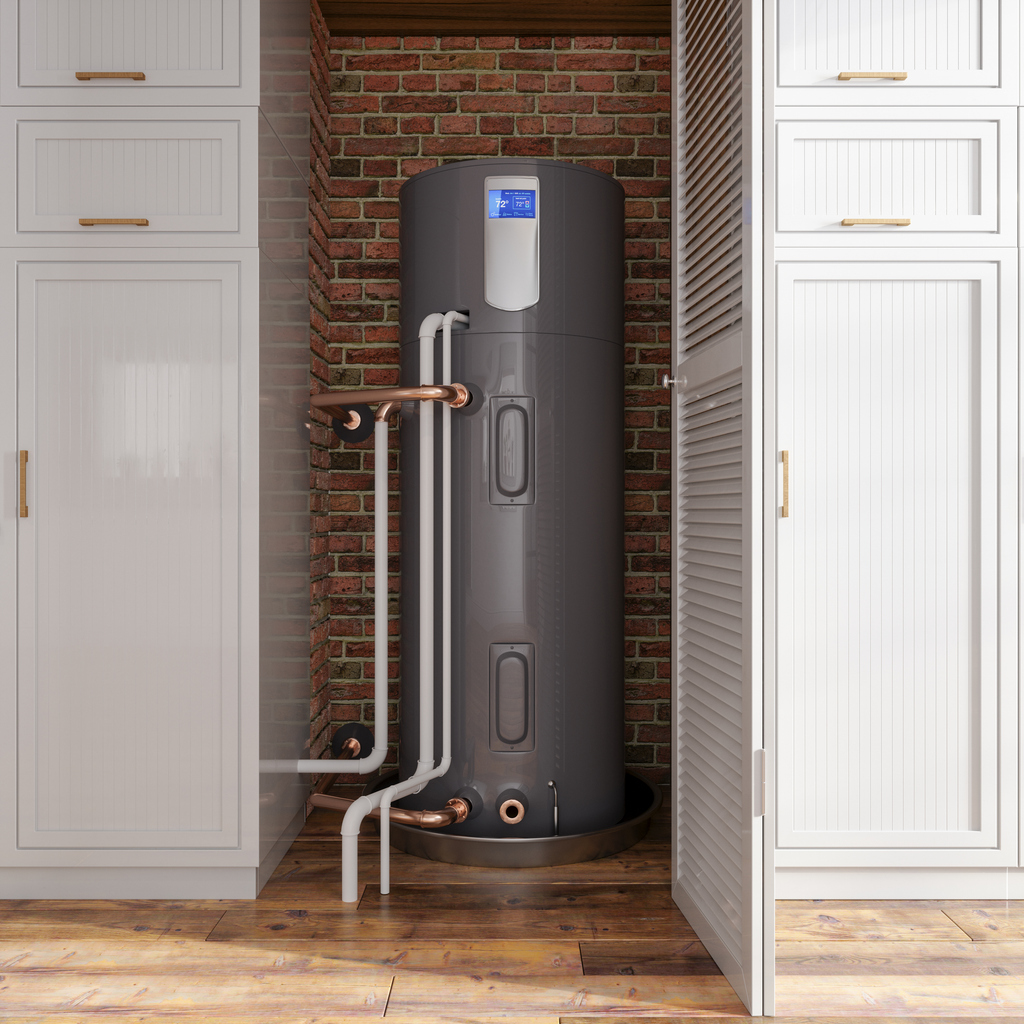
Most Memphis homes still rely on traditional tank-style water heaters, powered by gas or electricity. These units usually have a thermostat built into the tank. On many gas heaters, you will see a dial near the bottom with markings like “warm,” “hot,” or letters instead of exact numbers. Electric heaters often have thermostats behind small panels, sometimes with two thermostats, one for the upper element and one for the lower.
If you are making a seasonal water heater adjustment on a gas tank heater, the safest starting point is that outside dial. A cautious approach is to move the dial just a small amount, often a quarter turn or less, in the direction you want, then leave the heater alone for several hours. The water inside the tank needs time to reach the new setting, so adjusting and then checking a minute later does not give a real picture of the change.
After several hours, you can test the temperature at a nearby tap using a simple kitchen thermometer. Run the hot water until it is as hot as it will get, collect some in a mug, and measure. If it is around 120 degrees, you are in the recommended zone. If it is significantly lower and your showers feel weak in winter, a small increase might help. If it is much higher, especially above 130 degrees, you may want to dial it slightly down for safety, then retest.
Electric heaters are trickier, because the thermostats are often behind screw-on covers and, beneath those covers, there are live electrical components. We do not recommend homeowners remove those panels. Adjusting internal thermostats with exposed wiring is work we reserve for licensed technicians. What you can do is confirm whether your breaker has been tripping, listen for unusual noises, and test tap temperature as described. If you cannot get stable, comfortable hot water with modest seasonal changes, it is time for us to take a look.
Our technicians spend a lot of time calibrating and testing tank thermostats and mixing valves in Memphis homes. With fully stocked service vans, we can flush sediment, replace faulty thermostats, or add mixing valves that allow the tank to run slightly hotter while still delivering safe water at the tap. That kind of fine tuning goes beyond seasonal tweaking at the dial, and it is where professional service can make a noticeable difference.
Seasonal Adjustments for Tankless Water Heaters
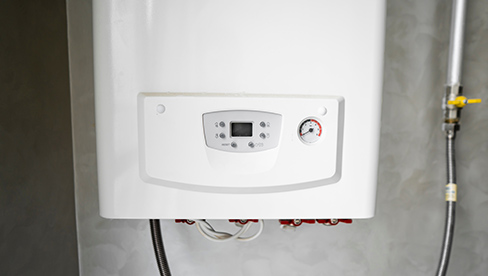
Tankless water heaters are becoming more common in our area, and they behave differently across the seasons. Instead of storing hot water in a tank, they heat water on demand as it flows through the unit. Most tankless models have a digital control panel where you can set an exact temperature, often in single degree increments. That makes seasonal adjustment easier to control, but the same safety ranges apply as with tanks.
In winter, the water entering a tankless heater in Memphis is colder, so the unit has to work harder to raise that water up to your set temperature as it passes through. Every tankless heater is designed to provide only a certain amount of temperature rise at a specific flow rate. If you have the unit set to a relatively high temperature and you are running multiple showers, a dishwasher, and a washing machine at once, you may notice that the water feels cooler in winter than it did with the same use in summer.
Two simple adjustments often help. One is to reduce the flow at the fixtures a bit, for example, by not running multiple high-demand appliances at the same time or by using low-flow showerheads. The other is a small seasonal bump in the digital temperature setting, staying within a safe range. Just like with tanks, we aim for around 120 degrees at the tap for most homes and check that with a thermometer rather than trusting the display alone.
If you find that even modest winter use causes your tankless heater to deliver lukewarm water or fluctuate badly, seasonal change may be revealing a sizing or maintenance issue. Mineral scale inside the heat exchanger can reduce how efficiently the unit transfers heat to the water, and that shows up most clearly when the heater is working hardest. Regular descaling is critical for performance, especially as local water conditions can leave mineral deposits inside the unit over time.
We install and service both tank and tankless units across Memphis, and seasonal complaints about lukewarm showers under multiple fixtures are something we address frequently. When we visit, we look at the unit’s capacity, the setpoint, the actual tap temperature, and the pattern of use in your home. That combination gives a clearer picture than simply turning the temperature up and hoping for the best.
Balancing Comfort, Energy Bills, and Safety Through the Seasons
Every degree you ask your water heater to add requires energy. In the winter, the difference between incoming water temperature and your thermostat setting is greatest, so the heater runs longer and more often. Pushing the thermostat significantly higher in response to cold weather can restore comfort in the short term, but it also increases your gas or electric bill and may put you closer to scald risk at the tap.
A better approach is to think of seasonal water heater adjustment as one tool among several for balancing comfort and cost. A small bump to the thermostat in the colder months, staying within safe limits, can help offset colder incoming water. Pair that with practical habits, such as slightly shorter showers, using warm instead of hot for laundry when possible, and running dishwashers with full loads, and you reduce the total demand on the heater.
Physical improvements to your plumbing system can also help without increasing scald risk. Insulating accessible hot water pipes in basements, crawlspaces, or garages reduces heat loss on the way to your fixtures. Modern low-flow showerheads maintain a comfortable feel while using less hot water per minute, so your heater does not have to work as hard. Fixing dripping hot water faucets and checking for other hot water leaks are simple ways to cut waste year-round.
When we recommend efficiency upgrades, we do it with upfront pricing and clear explanations. If we believe that adding pipe insulation, flushing sediment from an older tank, or replacing an undersized heater will save you money and improve comfort over time, we walk you through the options and costs first. Seasonal adjustment should work with these longer term improvements, not replace them.
Seasonal Changes vs. Signs Your Water Heater Needs Service
Not every hot water change that appears in winter or summer is a normal seasonal effect. Some are warning signs that your water heater needs professional attention. Distinguishing between the two can save you from over-adjusting the thermostat and either living with poor performance or creating a safety hazard.
Typical seasonal signs include slightly longer wait times for hot water to reach a far bathroom in winter or needing a small, measured adjustment of the thermostat to keep showers comfortable when the weather turns cold. If the temperature at the tap is still stable, there are no strange noises from the heater, and you are not seeing any water where it should not be, these changes are usually part of the normal seasonal pattern.
Red flags look different. If you suddenly run out of hot water much faster than usual, even with similar use, it can point to sediment buildup in the tank or a failing heating element. Rumbling, popping, or banging noises as the heater runs often indicate that sediment has built up at the bottom, creating a barrier between the burner or elements and the water. Rusty or discolored water from hot taps suggests corrosion inside the tank, and any visible leaks or moisture around the base of the heater need prompt attention.
Inside the tank, components like the dip tube play a key role. The dip tube directs incoming cold water to the bottom of the tank so the hottest water stays at the top near the outlet. If that tube breaks, cold water can mix near the top and cause sudden temperature drops at your fixtures. Seasonal stress can make a weakened dip tube or heating element finally fail, which is why problems sometimes seem to appear overnight when the weather changes.
Our experienced technicians arrive in fully stocked vans, ready to flush tanks, replace faulty components, and, when needed, talk through replacement options if your heater is near the end of its life. We are also available around the clock, so if a heater fails completely during a cold snap or starts leaking, you can reach us for urgent help. Seasonal changes should not leave your family without safe, reliable hot water.
Memphis-Specific Tips for Year-Round Hot Water Comfort
Memphis weather brings long, humid summers and periods of surprisingly cold winter air. Those swings affect not only the water temperature at the street but also the spaces where many water heaters live. In older homes, it is common to see heaters in garages, crawlspaces, or attics, where seasonal temperatures swing much more than inside your living areas. That extra heat or cold around the unit can change how efficiently it operates and how much heat is lost from the tank and piping.
We recommend a simple seasonal routine tailored to our local climate. Before the heaviest winter use, many homeowners schedule a tank flush, especially if their heater is several years old and has never been cleaned out. That removes some of the sediment that can make winter performance worse. Checking and adding insulation to easily accessible hot water pipes in basements or crawlspaces before cold weather arrives can also make a noticeable difference.
Twice a year, often in early fall and late spring, it helps to test the hot water temperature at a tap with a kitchen thermometer. This quick check gives you a clear picture of whether your settings are still in a safe, effective range and whether small seasonal tweaks are working as expected. If you notice big swings in temperature that do not match your adjustments, or if you see any of the warning signs we listed earlier, it is a good time to have us inspect the system.
Many Memphis-area homeowners trust our team for regular water heater checkups, seasonal tune-ups, and honest advice on when it is time to repair or replace an aging unit. Our 5-star rating and thousands of customer reviews reflect that long-standing relationship with local families. Seasonal water heater adjustment works best as part of an overall plan for comfort and efficiency, not as a stand-alone fix.
Keep Your Showers Comfortable in Every Season
Seasonal shifts in Memphis will always affect how your water heater performs, but they do not have to leave you guessing. When you understand how incoming water temperature, safe thermostat ranges, and your home’s plumbing layout interact, you can make smart, safe seasonal adjustments. Combined with simple maintenance and a watchful eye for warning signs, these steps keep showers comfortable, bills manageable, and your family safer around hot water.